
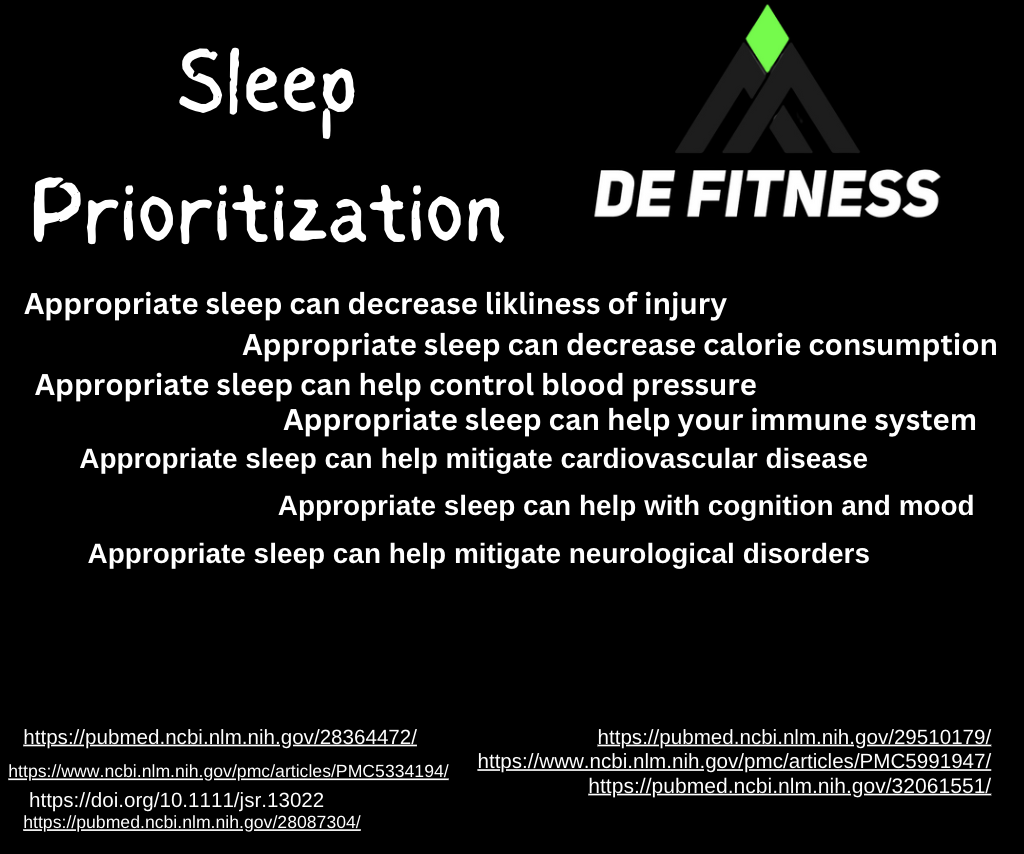
I recently gave a presentation on the topic of sleep, with a focus on several research articles to ensure quality information. Although this is a blog, my intent is to go into a direction mitigating pure opinion and share the simplistic details on seemingly complex topics of information.
“If you do not welcome the time for sleep willingly, your body will resist with equal mettle.”
-Ryan Palmer
Upon initiating my research, I did not expect as much outcomes as I have stumbled across. Several articles suggest getting an average of 7-8 hours of sleep per night. Sleeping <7 increases risk as much as 9< hours of sleep on blood pressure, cardiovascular disease, restless leg syndrome, increased risk of obesity and type 2 diabetes, Compromise your immune system (increase risk of getting sick), increase risk of physical injury, increase mood disorders, and neurological disorders (Alzheimers, Parkinson’s, Multiple systems atrophy)
Although it was found there are some individuals who have genetic predisposition to require more/less sleep, the majority fall within the ideal 7-8 hour window of sleep to improve life and health span.
Actions:
Try to keep a consistent sleep schedule, waking up around the same time even
on weekends.
● Set a bedtime that is early enough for you to get at least 7 hours of sleep.
● Establish a relaxing bedtime routine that helps to transition from your day.
● If you’re having trouble falling asleep, don’t lie in bed awake. If you can’t get to
sleep, get out of bed, and do something relaxing until you feel tired.
● Create a healthy sleep environment– avoid bright lights and loud sounds, keep
the room at a comfortable cool temperature, and try to limit electronics in your
bedroom.
● Exercise regularly (but not within the few hours before going to bed). This will induce exhaustion, in turn improving quality of sleep and encouraging a more appropriate sleep schedule.
● Avoid caffeine and nicotine late in the day and limit alcoholic drinks before
bed….
● cognitive behavioral therapy for insomnia (CBT-I), which is recognized as a first
line treatment for insomnia.
● Supplements research may be a topics for another time..
○ Melatonin, Magnesium etc.
Check out our Website for more information

To read more, learn more, and become the best version of yourself, follow us at our links below:
Website: https://englandcoaching.com/reading-blog/
Instagram: https://www.instagram.com/djengland/
Facebook: https://www.facebook.com/DE.Health.Fitness
YouTube: https://www.youtube.com/@EnglandFitness
Twitter: https://twitter.com/dylanjengland
Or to reach out to us:
Email: Fitnesstherapyde@gmail.com
Leave a Reply